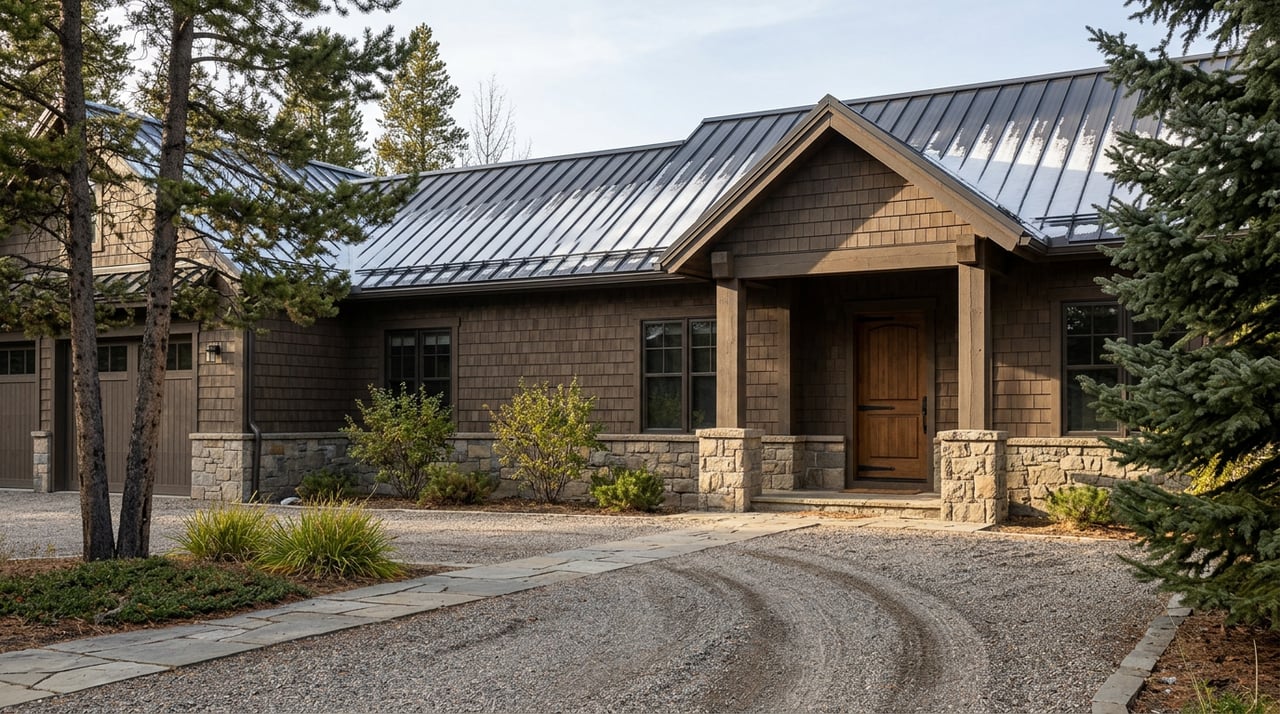
Building your own legacy home near Wilson can be one of the most rewarding ways to live in Jackson Hole. It can also be complex if you are new to Teton County’s land rules, wildlife protections, short building seasons, and utility logistics. This guide gives you a clear, practical roadmap so you can move from inspiration to a smart, well‑sequenced plan. Let’s dive in.
Start with the rules that shape your build
Before you fall in love with a parcel, confirm how county regulations apply. Teton County’s Land Development Regulations (LDRs) govern zoning, setbacks, grading, utilities, lighting, and more. Review the current Land Development Regulations and use them as your baseline.
A major factor near Wilson is the county’s Natural Resources Overlay. The updated, tiered system became effective in 2025 and changes how new development is reviewed. If a lot falls in a Mid or High tier, you should expect added environmental submittals before permits. Start by checking the Natural Resource Protections page to understand tiers and assessment requirements.
You should also verify whether your property lies within the Wildland‑Urban Interface. WUI review is required for mapped areas and will influence defensible space and site‑hardening details during building permit review. The County’s Building Division explains current code adoption, the SmartGov application portal, and how WUI review fits into your submittal.
Finally, flooding and riparian proximity are real considerations along the Snake River corridor. FEMA flood maps are being updated, and the County applies pending products to new proposals. Check your parcel using the Floodplain Maps & Studies resources and confirm whether river or stream setbacks apply. LDR standards include buffers such as 150 feet from rivers and 100 feet from perennial streams, which can significantly limit buildable area.
Utilities, water, and septic: confirm early
Wilson properties vary: some are served by local districts, and others rely on wells and septic. Your first question is whether a lot has access to district water and sewer or will require on‑site systems.
- If the lot is outside a service district, you will need to pursue a domestic well. Wyoming law prefers domestic and stock uses up to 0.056 cubic feet per second, or 25 gallons per minute. Review the statute for context and engage the State Engineer’s Office early about feasibility for your specific parcel. See Wyoming’s domestic well preference in W.S. §41‑3‑907.
- For on‑site wastewater, the County regulates permitting and often restricts winter installations. Confirm the timing and trade‑permit details using the County’s Building Forms and Checklists. Plan your design and excavation schedule around seasonal windows.
- Electric service in the 83014 ZIP is typically provided by Lower Valley Energy or the cooperative serving the area. Investigate whether the lot has existing transformers, the distance to the nearest connection point, and any extension fees. Use this 83014 utility overview as a starting reference, then confirm with the provider.
One more detail that affects trenching and costs: the LDRs generally require new utilities to be installed underground. Budget for coordination with the utility provider and include trenching, conduit, and restoration in your site plan.
Wildlife, conservation, and scenic protections
Wilson’s setting is special, and local rules reflect that. Riparian setbacks, habitat overlays, and conservation easements frequently shape what and where you can build. Many valley properties near Wilson sit next to protected lands or hold private conservation easements. If you are evaluating a parcel, verify whether an easement exists on or adjacent to it. The Jackson Hole Land Trust provides context on local conserved properties and can help you understand how easements operate.
Wildlife coexistence is a day‑to‑day reality. Expect requirements and best practices around bear‑resistant trash, attractant management, and sometimes electric fencing for feed or compost. Local partners outline practical steps for a bear‑wise property; see guidance on bear‑resistant containers and attractants to plan ahead.
Teton County also limits exterior lighting to protect dark skies and scenic values. Review the County’s exterior lighting summary and LDR sections during design to select compliant fixtures and produce a lighting plan that passes review.
The Teton County permit path
Every project is unique, but most custom homes near Wilson follow a common sequence. Use this as your high‑level roadmap and confirm specifics with the County.
1) Pre‑application and site inventory
Start with a pre‑application consultation and assemble your base studies: survey, topography, wetland screening, and geotechnical exploration. This step helps your team confirm setbacks, access, drainage, and likely constraints so your architect can shape a viable concept. County checklists and pre‑app guidance are available through Building Forms and Checklists.
2) ZCV or Natural Resource Assessment
Depending on the NRO tier, you will submit either Zoning Compliance Verification or a Natural Resource Assessment. Mid and High tiers often require environmental or biological input and may lead to a full Environmental Analysis. Start this early to avoid seasonal survey delays. See the county’s overview of Natural Resource Protections for tier details.
3) Grading and erosion control
If your sitework exceeds certain thresholds, the County will require a plan‑level grading and erosion control submittal prepared by a Wyoming‑licensed civil engineer or landscape architect. On steeper or complex sites, this step dovetails with geotechnical recommendations and driveway design.
4) Building permit with WUI review
Your building permit package will include current model code compliance and, if mapped, a WUI review for wildfire resiliency. Teton County moved to 2024 model code editions for permits submitted in 2025, so confirm details with the Building Division and use the SmartGov portal to submit and track status. Trade permits for mechanical, plumbing, and electrical follow as sub‑permits.
5) Septic or sewer connection, and well permit
If you are on a district system, obtain connection approvals and pay connection fees. If you are on septic, secure County wastewater approvals and schedule installation within the allowed window. For new wells, pursue State Engineer permitting and registration after confirming feasibility. The County’s Building Forms and Checklists page consolidates wastewater forms and process steps.
6) Inspections and Certificate of Occupancy
County inspections occur throughout construction. In some winter scenarios, the County may allow bonding for unfinished site work so you can obtain a Certificate of Occupancy, then complete landscape or exterior items when the ground thaws. Coordinate this early if your schedule runs late season.
The right team for a mountain build
A Wilson‑area custom home performs best when it is purpose‑built for snow loads, freeze‑thaw cycles, and wildlife‑sensitive siting. Consider assembling this core group early:
- Architect with mountain and cold‑climate expertise
- General contractor experienced in custom Jackson Hole projects
- Civil engineer for grading, drainage, and driveway design
- Geotechnical engineer for soils and foundation recommendations
- Septic designer or wastewater specialist for on‑site systems
- Licensed surveyor for boundaries, easements, and recorded envelopes
- Optional permitting consultant or owner’s rep to coordinate reviewers and sequencing
- Optional wildlife‑wise landscaper to address attractants and defensible space
Local practitioners also note that Jackson Hole construction costs and crew availability differ from national norms. For context, local sources often cite high‑end custom costs in the range of 750 to 1,000 plus dollars per square foot, with significant variation by site and finish level. For a thoughtful overview on what drives budgets here, review this local architecture perspective on Jackson Hole building costs.
Budget, timeline, and common risk points
Set expectations up front and you will navigate decisions more confidently.
- Cost drivers: Long utility runs, underground requirements, steep slopes and retaining walls, well drilling and septic, driveway grading, and winter construction logistics often move budgets more than finish selections. Your site analysis will surface these early so you can design accordingly.
- Timeline: A conservative planning window from purchase to move‑in is 18 to 30 months for a custom home on raw land. Design complexity, environmental reviews, seasonal sitework, and contractor schedules can all affect duration. Many owners plan for roughly two years to reduce pressure on decisions and sequencing.
- Permitting cadence: Pre‑application and resource assessments add weeks to months depending on tier and season. Building plan review time improves with a complete package and coordinated trade documents. Use the County’s SmartGov portal and Planner‑of‑the‑Day support to track status.
- Risk to flag: Water supply uncertainty, natural‑resource constraints, floodplain updates, and winter installation restrictions can all affect feasibility and cost. Build contingencies into your budget and purchase contract, especially around well permits and septic suitability.
Your first 60–90 days, simplified
Use this checklist to turn interest into informed action:
- Pull the County GIS record for the exact parcel and note zoning, recorded building envelopes, NRO tier, flood layers, and any existing permits. Then contact the Planner of the Day for a preliminary review. Start with the County’s Building Forms and Checklists.
- Ask the seller for the recorded plat, CC&Rs or HOA documents, prior surveys, well and septic records, and any utility easement information. If applicable, request any conservation easement deed for review.
- Engage a local surveyor and geotechnical engineer to confirm boundaries, soils, and slope stability. Book a County pre‑app meeting to validate likely LDR and NRO constraints before you finalize design.
- If the lot lacks district water or sewer, speak with the State Engineer’s Office about domestic well feasibility and consider test work or nearby well log review. If in a service district, ask about connection fees and timing.
- Assemble your architect and local builder to produce order‑of‑magnitude budgets based on actual site conditions. This early pricing helps you prioritize foundation approach, driveway design, and utility routing.
Bring it all together
Building near Wilson is a commitment to place. When you approach it with the right homework, the right team, and a realistic schedule, you create a home that fits the land and your life. If you want help evaluating parcels, structuring a smart purchase, and connecting with the best local professionals, reach out to JH Living. We will guide you from first look to closing with clear counsel and concierge‑level service.
FAQs
What should I check first when evaluating a Wilson buildable lot?
- Start with zoning and the LDRs, NRO tier, flood layers, recorded building envelopes, utility availability, and whether WUI and lighting rules will apply.
How do the Natural Resources Overlay tiers affect my home design?
- Mid and High tiers usually require added environmental assessments and can shape your building envelope, driveway routing, and utility runs before permits are issued.
Can I drill a domestic well if the lot is not in a water district?
- Wyoming gives preference to domestic wells up to 25 gallons per minute, but you must confirm feasibility and secure permits through the State Engineer’s Office.
What timeline should I expect from purchase to move‑in?
- Many owners plan 18 to 30 months for a custom mountain home, accounting for design, reviews, seasonal sitework, and contractor availability.
Are there seasonal limits on septic or grading work in Teton County?
- Yes, the County enforces seasonal restrictions on certain sitework, so coordinate wastewater installs and grading around approved windows.
Who provides electricity in the Wilson area, and will it be underground?
- Most of 83014 is served by Lower Valley Energy or the local cooperative, and the LDRs generally require new utilities to be installed underground.