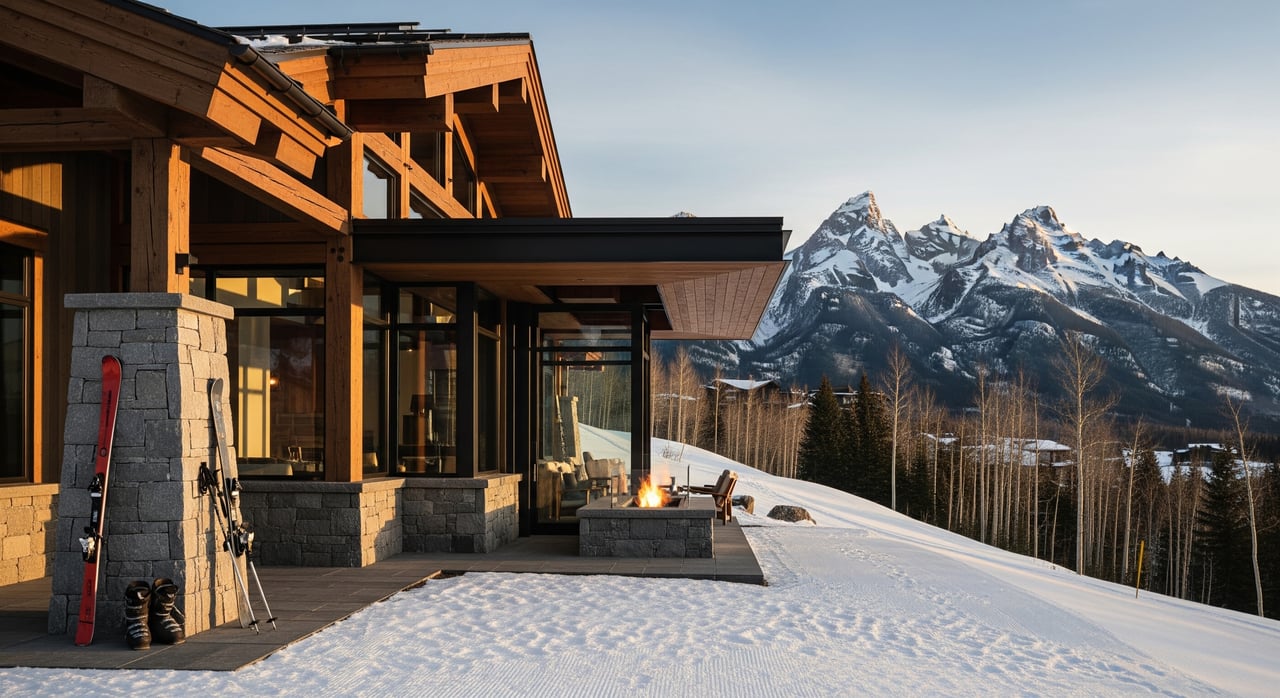
Love the idea of clicking into your skis right outside your door in Teton Village? You are not alone. Slopeside living is one of Jackson Hole’s most sought-after experiences, but the labels can be confusing and the premiums are real. In this guide, you will learn what ski-in/ski-out means here, how access type impacts price, rentals, and resale, and the due diligence steps that protect your investment. Let’s dive in.
What ski-in/ski-out means here
Not all “ski-in/ski-out” is the same. In Teton Village, clarity on access type is essential.
True ski-in/ski-out
- Door, porch, or grounds connect directly to a groomed run or return trail with no road crossing or walk required.
- Often includes a deeded ski easement and on-site ski storage or valet.
- Highest convenience and market cachet.
Ski-adjacent or ski-side
- Short walk or steps to access a lift, run, or corridor. May include stairs, a plowed lane crossing, or a brief village path.
- Strong slopeside feel at a lower price point than true on-piste.
Ski-accessible via shuttle or gondola
- Reach lifts by walking to a gondola or using a shuttle schedule or on-demand service.
- Lower slopeside premium and often larger units or more amenities.
Ski-remote
- Mountain views without practical direct access. Different expectations and pricing profile.
Why clear labels matter
Marketing phrases like “near the lifts” are vague. Ask for exact door-to-lift time in winter conditions, the number of steps, and any crossings. If “ski-in/ski-out” is claimed, request recorded easement language.
Teton Village layout and life
Jackson Hole Mountain Resort’s key lifts and gondolas are clustered in a compact base at Teton Village. Proximity to a lift loading point is one of the biggest drivers of convenience and value. The village core mixes hotels, condos, shops, restaurants, rental desks, ski school, and storage, which creates an easy, park-once lifestyle.
Ski operations and weather shape daily access. Jackson Hole runs steep, high-vertical terrain. Patrol, avalanche control, grooming, and storm cycles can change which return routes are open, especially early and late season. Snow removal and maintained village paths also affect how a building truly functions in winter.
Teton Village is a premium, limited-supply market that attracts affluent second-home buyers and investors. Convenience, privacy, and full-service amenities drive demand. Wyoming does not have a state personal income tax, though local lodging and sales taxes apply if you rent. Teton County and local HOAs may have short-term rental rules and occupancy limits, and any ski easements or maintenance obligations should be verified in county records.
How access type impacts value
Pricing and premiums
- The closer and more direct the access, the higher the premium. Door-to-slope and deeded easements command top pricing.
- Premiums vary by property class, bedroom count, views, HOA amenities, and market conditions. Scarcity of true on-piste units supports liquidity.
Lifestyle and guest experience
- True ski-in/ski-out means minimal transfer time and easy midday laps, which families and frequent skiers love.
- Ski-adjacent is an excellent balance, often with better access to village amenities.
- Shuttle or gondola access fits buyers who want space, privacy, or full-service amenities over immediate slope contact.
Resale confidence
- Clear, verifiable access and strong building services help support resale. Buildings with consistent access and documented easements tend to hold appeal among repeat guests and buyers.
Investor lens: rentals and management
- Slopeside stays are popular in peak seasons. True ski-in/ski-out and ski-adjacent units often achieve higher nightly rates and strong occupancy with affluent travelers.
- Your rental plan depends on HOA rules, minimum-stay policies, local lodging registrations, and the availability of on-site or third-party management.
- Fractional ownership and condo-hotel programs are common at resort properties. Always request historical occupancy and average daily rate data when available.
Costs, HOAs, and services
- Resort HOA dues often include common-area upkeep, snow removal on walkways, exterior maintenance, and sometimes shuttle, concierge, or utilities.
- Budget for management fees if renting, off-season maintenance, insurance suited to mountain exposure, and the possibility of special assessments for big capital items.
- Parking can affect guest experience and may be a defined HOA cost center. Confirm assigned spaces, guest allowances, and valet arrangements.
Risk, insurance, and safety
- Avalanche exposure can be higher near certain lines or drainages. Jackson Hole conducts control work, but private properties can still need mitigation and specific insurance.
- Wildfire and extreme weather trends can affect access and coverage. Confirm current risk assessments for the parcel and building.
- Title items like ski-area access agreements or slope maintenance obligations may run with the property, so review the title report and CC&Rs.
Your due diligence checklist
Use this framework to compare listings and safeguard your purchase.
Access and easements
- Is “ski-in/ski-out” documented in the deed or just marketing language?
- Request recorded easements or rights-of-way that connect to resort land.
- Clarify who maintains any access path and what it costs.
- Document winter conditions from door to lift, including any crossings.
Practical usability
- Measure door-to-lift time in minutes and count steps or crossings in winter.
- Confirm return routes, grooming, and any early or late season closures.
- Locate ski lockers, boot dryers, or valet and verify access.
HOA, rental, and operations
- Review CC&Rs for short-term rentals, minimum stays, and owner-use rules.
- Check for required rental programs or on-site management contracts.
- Request assessment history, reserve status, and planned capital projects.
- List the services your dues cover, from snow removal to utilities.
Financial and tax items
- Confirm property tax history with the county assessor.
- Understand local sales and lodging taxes and registration steps if you plan to rent.
- Ask lenders about second-home versus investment underwriting for resort condos.
Insurance and hazards
- Ask if policies need avalanche or other hazard endorsements.
- Inquire about mitigation measures and any historical incidents nearby.
- Confirm fire protection access and defensible-space measures where applicable.
Resale and market data
- Identify how many comparable true ski-in/ski-out units exist in the development to gauge supply.
- Request historical sales for comps and any rental history for the unit or building.
- Understand who the likely buyer pool will be when you decide to sell.
Title and legal review
- Obtain a full title report for easements, covenants, encumbrances, and any ground leases.
- Confirm whether your interest is fee-simple, condo regime, fractional, or condo-hotel.
Guest logistics
- Verify parking counts, guest policies, and shuttle options.
- Plan arrival logistics, winter luggage handling, and any seasonal transport.
- Map on-site amenities such as dining, spa, and pool and note any third-party leases that impact service.
Buyer questions to use
- Is the ski access deeded, and can you show the recorded easement?
- From the unit door to the nearest lift, what is the walk time in winter, and does it require stepping onto a road?
- Are return runs groomed and regularly open, and have there been closures nearby recently?
- What are the HOA rules on short-term rentals, and is there a required management program?
- Can you provide historical rental, occupancy, and ADR data for this unit or building?
- Are there any natural hazard exposures that affect insurance or use?
- What services are included in the HOA, and how stable are dues and reserves?
How to compare two listings
- Time the transition. Start a stopwatch from the unit door to the lift loading point during typical winter conditions. Note steps and any crossings.
- Verify paperwork. Request recorded easements and confirm who maintains any ski path or return trail.
- Confirm operations. Ask about grooming and seasonal closures that affect actual use.
- Read the fine print. Review CC&Rs for rental rules, services included, and assessment history.
- Model the hold. Estimate taxes, HOA, insurance, and management fees alongside realistic rental assumptions.
- Check comps. Compare price per square foot and days on market for true ski-in/ski-out versus ski-adjacent in the same micro-location.
Work with a local advocate
If slopeside living is your dream, clear information is your edge. You deserve a guided process that maps the door-to-lift reality, verifies recorded easements, and translates HOA rules and operating costs into a confident decision. For boutique, concierge-level help from a long-time local who understands both lifestyle and numbers, connect with JH Living.
FAQs
What counts as true ski-in/ski-out in Teton Village?
- Direct, groomed access from your door to a run or return trail with no walk or road crossing, often supported by a deeded ski easement.
Are Teton Village return routes always open all season?
- No, operations, patrol, grooming, and storm cycles can change access, especially early and late season, so confirm typical closures for your location.
How do HOA rules affect rentals in slopeside condos?
- HOAs may set short-term rental permissions, minimum stays, and management requirements, which directly shape your revenue plan and owner use.
Do slopeside units command a price premium in Jackson Hole?
- Yes, closer and more direct access generally commands higher pricing, with premiums influenced by views, services, unit class, and scarcity.
What insurance should I consider for a ski-in/ski-out home?
- Ask about coverage for avalanche and other natural hazards, confirm any required endorsements, and review mitigation measures near the property.
What documents verify ski access and obligations?
- Title reports, recorded easements or rights-of-way, and HOA CC&Rs outline access rights, maintenance duties, and any long-term obligations.