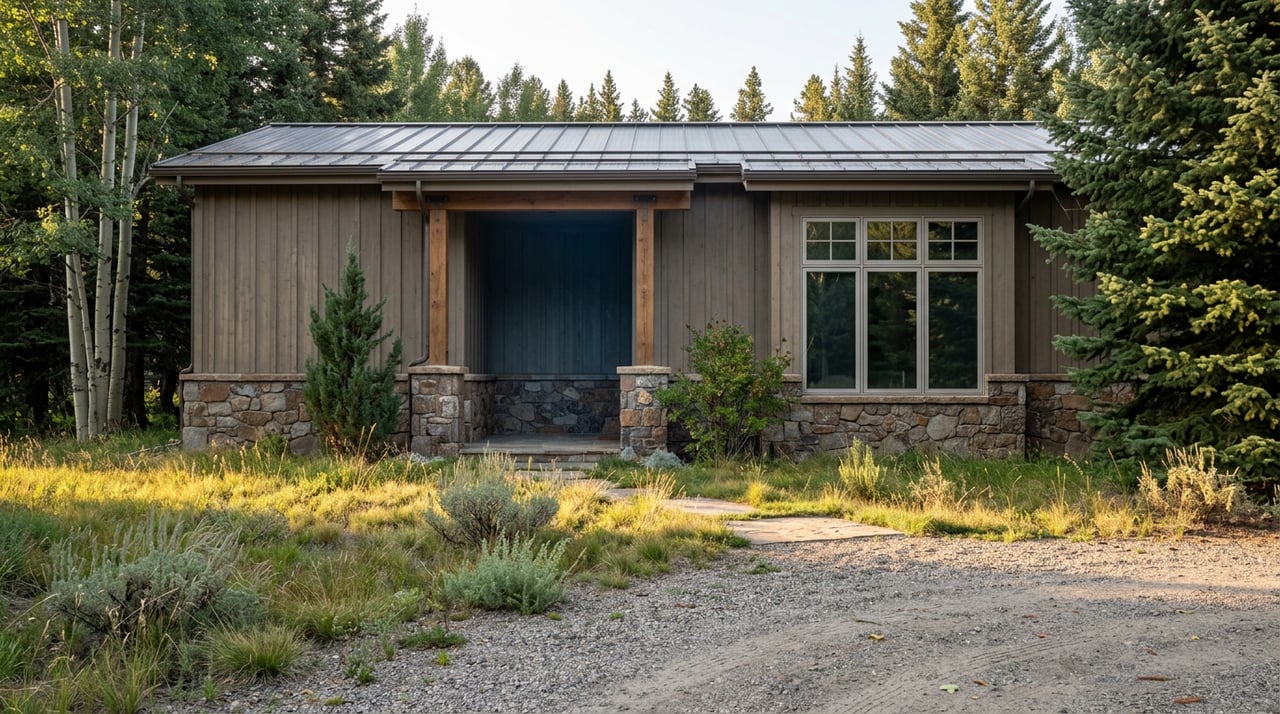
What does a median price actually tell you in a town where the total number of homes that trade hands each year could fit in a single school bus?
In Wilson, Wyoming, the honest answer is: less than the headline suggests. Over the three months ending April 2026, the median sale price for a Wilson home came in at $6.5 million, down 18.7 percent from the same three-month window a year earlier. That reads like a market correction. It isn't one. It's closer to a rounding error dressed up as a trend, and the real number a buyer should be chasing in Wilson doesn't show up on any price sheet at all.
Why an 18 Percent Swing Doesn't Mean What You Think
Wilson is small. It's unincorporated, it has no town government of its own, and the number of homes that close here in any given quarter is low enough that a single sale can move the median by seven figures without reflecting any real shift in value.
Here's the proof, sitting in the data itself. That $6.5 million figure is a trailing three-month sold median through April 2026. A few months later, in July 2026, the median asking price for homes listed in Wilson sat at $3.75 million, with those listings spending a median of 138 days on the market before finding a buyer. Two measures of the same tiny market, taken a few months apart, land nearly $3 million apart. That gap isn't a market crash and it isn't a recovery. It's what happens when you calculate a median from a handful of transactions instead of a statistically stable pool.
If you're comparing Wilson to a market with real transaction volume, drop the habit. The median here is a snapshot of who happened to list or close that particular quarter, not a stable read on what a given property is worth.
The Real Question a Price Tag Doesn't Answer
If the median can't tell you much, what can? In Wilson, the answer has nothing to do with price bracket and everything to do with what's underneath the lot.
Wilson sits in unincorporated Teton County. There's no town hall to call about a water bill and no single municipal sewer main running under every road. Instead, utility service is a patchwork: some subdivisions connect to community water and sewer through local districts, and most other Wilson parcels depend on a private well for drinking water and an individual septic system for wastewater. Two homes at the identical price point can carry completely different obligations depending on which side of that line they fall on.
Some Wilson Addresses Sit on a Water Main. Most Don't.
Because Wilson has no municipal utility department, septic systems here are designed, permitted, and inspected through Teton County's Small Wastewater Facility program, administered by a county official the code calls the Sanitarian, defined as "the official designated by the BCC to oversee and administer Teton County's small wastewater facility program."
That program isn't a formality. County regulations set a minimum septic tank liquid volume of 1,000 gallons for a residence with up to four bedrooms, with an additional 250 gallons of required capacity for every bedroom beyond that. In practice, this means the septic system, not the floor plan on the listing sheet, sets the real ceiling on how many bedrooms a property can legally support. A fifth or sixth bedroom added without an engineered upgrade to match isn't a design choice. It's a compliance problem waiting to surface at resale.
Here's a simplified comparison of what that split actually means for a buyer:
| District-Served Home | Well-and-Septic Home | |
|---|---|---|
| Water source | Connected through a local water district | Private well, permitted through the Wyoming State Engineer's Office |
| Wastewater | Connected to district sewer service | Individual septic system, sized to bedroom count |
| Extra diligence | Confirm district boundary and tap fees | Pull septic permit file, confirm design bedroom capacity |
| Seasonal risk | Minimal | New installs barred in winter |
| Who inspects | Water and sewer district | Teton County Sanitarian |
The Five-Month Window Nobody Puts on a Listing Sheet
This is the friction that catches buyers off guard, and it's worth building into a contract timeline before it becomes a problem during closing week.
Teton County bars new septic system installations between November 15 and April 15 every year because of frozen ground and the installation complications that come with it. The only exception is repair work on a system already serving an occupied home. A brand-new construction project or a full septic replacement doesn't qualify for that exception, which means anyone counting on a fall closing that depends on new septic work is racing a hard stop that has nothing to do with financing, appraisal, or anything else in a typical purchase agreement.
Scheduling compounds the pressure. Every new system has to be designed by a licensed Wyoming Professional Engineer, and the county requires a site-specific soil evaluation, typically a profile hole, in nearly all cases before it will issue a permit. None of that happens the week before closing. Stack an engineered design and a required soil evaluation against a five-month seasonal ban, and a September offer on a home that needs new septic work can quietly turn into a spring closing.
How to Actually Diligence a Wilson Listing
None of this shows up in a listing description, so bring your own checklist to the table.
- Ask directly whether the parcel is inside a water or sewer district or dependent on a private well and septic system, before you fall for a floor plan.
- If it's septic, request the permit file and the engineered bedroom capacity, not just the bedroom count on the listing.
- If you're targeting a fall or winter closing and any septic work is needed, build the November 15 cutoff into your contract timeline now, not after inspection.
- If it's well-served, ask for recent water quality testing and confirm the well's permit through the Wyoming State Engineer's Office.
- Treat the median price as a conversation starter, not a verdict. Wilson's sales volume is thin enough that a headline number can be a full quarter behind the parcel you're actually looking at.
FAQ
Does every home in Wilson rely on well and septic? No. Coverage is a patchwork. Some subdivisions connect to a local water or sewer district while most Wilson parcels still depend on a private well and an individual septic system, so service has to be confirmed address by address rather than assumed.
Can I install a new septic system in the winter? Not under current Teton County policy. New installations are barred between November 15 and April 15 because of frozen ground, though repairs to a system already serving an occupied home are allowed during that window.
Why did Wilson's median price fall so much? Because so few homes close in Wilson in any given quarter, the specific mix of properties that happen to sell can swing the median by seven figures without reflecting any real change in value. Comparing the trailing sold median to the separate asking-price median a few months later makes the point on its own.
How long does septic permitting take in Teton County? There's no same-week path. Every system needs a design from a licensed Wyoming Professional Engineer, and the county requires a site-specific soil evaluation in nearly all cases before it will approve a permit. Add the seasonal ban on top of that and the honest answer is: plan months ahead, not days.
If you're weighing a Wilson property and want someone to walk the utility question with you before you fall in love with a listing photo, JH Living has been reading these parcels since 2007. Let's Connect and figure out what's actually underneath the price tag.